

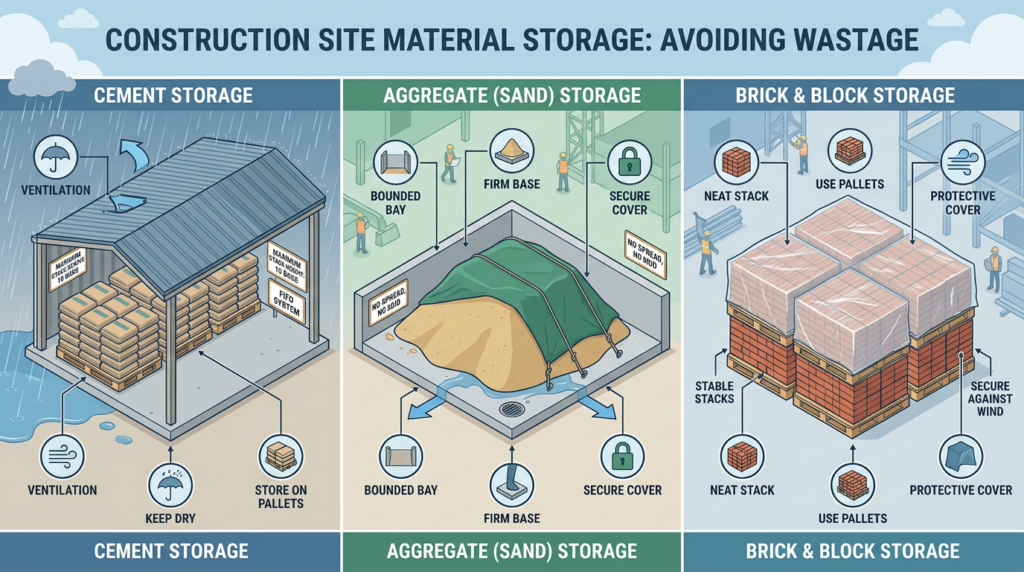
On a construction site, materials are money. If cement gets damp, sand is washed away, or bricks are chipped and broken, your project cost goes up immediately. With a few simple storage practices, you can greatly reduce wastage and keep your materials in good condition until they are used.
How to Store Cement Correctly
Cement is hygroscopic, which means it absorbs moisture from the air very easily and can harden or lose strength if stored badly.
Key precautions:
Keep cement in a dry, enclosed room or shed with a leak‑proof roof and walls free from damp patches.
Never place bags directly on the floor; store them on wooden pallets or planks at least 15–20 cm above ground level.
Maintain a gap between cement stacks and external walls (about 60 cm) to avoid moisture transfer.
Cover stacks with waterproof plastic sheets or tarpaulins, especially during rainy or humid conditions.
Follow the FIFO (First In, First Out) method—use the oldest bags first so cement does not sit too long and lose strength.
Avoid:
Storing cement outdoors or on bare soil.
Keeping bags next to wet materials, chemicals, or strong odours.
Opening bags long before use; once opened, use immediately.
How to Store Sand Safely
Sand left exposed can be washed away by rain, contaminated by soil and rubbish, or mixed with other materials, which weakens concrete and mortar.
Best practices:
Allocate a dedicated sand storage bay or area on site, away from topsoil, rubbish, and other materials.
Prepare a firm, level base—compacted earth, concrete, or timber planks—to reduce mixing with mud.
Where possible, surround the sand with low bunds or boards to keep it in place and prevent loss during heavy rain.
Cover sand heaps with tarpaulin during storms to reduce wash‑off and contamination.
Store different types of sand (e.g., plastering sand, coarse sand) in separate heaps with clear labels.
Avoid:
Letting vehicles drive over sand heaps, which introduces mud and oil.
Mixing leftover concrete or debris into the sand pile.
How to Store Bricks to Prevent Damage
Bricks can crack, chip, absorb moisture, and grow moss if they are stacked carelessly or left in standing water.
Good storage habits:
Stack bricks on firm, level, and preferably dry ground; use pallets or timber planks to raise them off bare soil when possible.
Build stacks in neat, stable tiers not more than about 2–2.4 m high to avoid toppling.
Keep stacks away from vehicle routes to reduce the risk of impact damage.
Cover bricks with plastic sheets or tarps during long periods of rain to minimise saturation and algae growth.
Separate different brick types or batches so that quality and colour are consistent during wall construction.
Avoid:
Throwing or dropping bricks when loading/unloading; move them in small groups with care.
Storing bricks directly in waterlogged or muddy areas.
General Site Organisation Tips to Reduce Wastage
A clean, organised storage area reduces loss, theft, and damage.
Choose high ground with good drainage for all material storage, away from flood‑prone areas.
Keep cement, sand, and bricks in clearly separated zones to avoid contamination and confusion.
Train workers on correct lifting, stacking, and covering methods to prevent accidents and material damage.
Inspect storage areas regularly for leaks, torn tarps, damaged bags, or unstable brick stacks and fix issues immediately.
By following these simple site‑storage practices, you can significantly reduce wastage of cement, sand, and bricks, keeping your project within budget and ensuring better quality concrete and masonry work.