

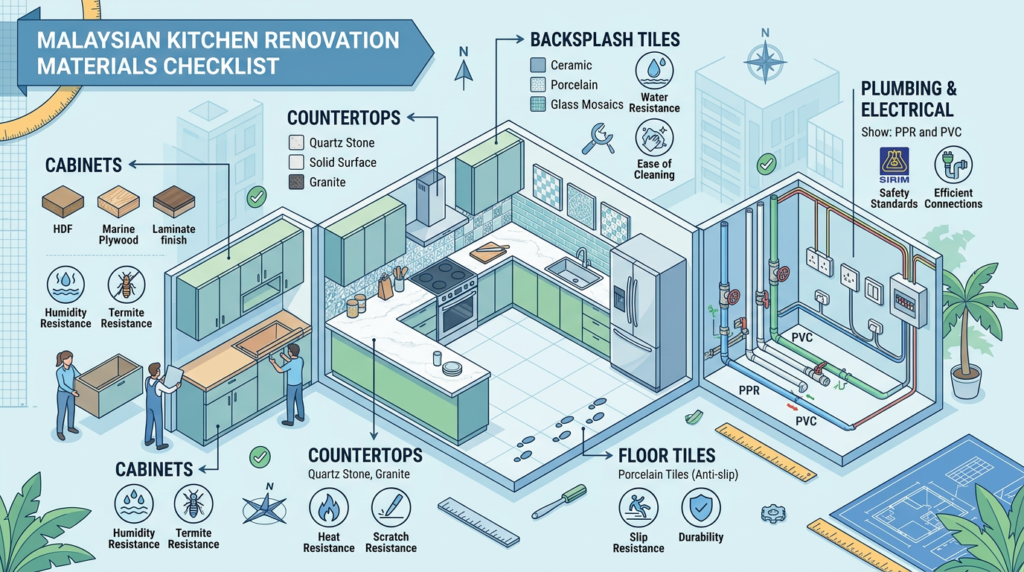
Renovating a kitchen in Malaysia means choosing materials that can tahan heat, humidity, oil, and daily wear. Use this checklist to make sure you don’t miss any of the key building materials needed for a typical wet or dry kitchen upgrade.
Structural and Wet-Work Materials
These are needed if you are hacking, extending, or changing the kitchen layout.
Bricks or lightweight blocks for new walls and half‑walls.
Cement, sand, and aggregates for concrete bases, floor screeds, and wall repairs.
Waterproofing membrane or coating for wet areas (sink, washing machine, bathroom‑linked zones).
Floor and wall tiles (non‑slip for floor, easy‑to‑clean for backsplash and walls).
Skim coat and plaster for smooth walls and ceilings before painting.
Kitchen Cabinets and Carcass Materials
Cabinets usually take the biggest portion of your kitchen budget, so material choice is critical.
Aluminium cabinets (especially for wet kitchen) – waterproof, termite‑proof, ideal for Malaysia’s humidity but higher upfront cost.
Plywood carcass with laminate finish – very common in dry kitchens; good balance of cost and durability.
Melamine / MDF board for doors or budget carcass – economical but less moisture‑resistant; better for drier zones.
Soft‑close hinges, drawer slides, pull‑out baskets, and corner mechanisms.
Countertops, Backsplash, and Flooring
Surfaces must handle hot pots, spills, and heavy traffic.
Countertops
Local granite – good value, durable and heat‑resistant.
Quartz – more stain‑resistant and uniform, popular in mid‑ to high‑end kitchens.
Solid surface / sintered stone – used in some designs for seamless or ultra‑thin looks.
Backsplash
Ceramic or porcelain tiles for easy cleaning.
Glass or quartz backsplash in higher‑end designs.
Flooring
Non‑slip porcelain or homogeneous tiles (most common).
SPC / vinyl flooring for dry kitchen zones where you want a wood look but easier maintenance.
Plumbing, Electrical, and Ventilation Materials
Hidden but essential for a safe, functional Malaysian kitchen.
Piping and fittings (hot and cold water, waste pipes) for sinks, dishwashers, and filters.
Floor traps, gratings, and proper slope screed to avoid water ponding in wet kitchen.
Wiring, trunking, and points for hob, oven, fridge, hood, microwave, and small appliances.
Distribution board upgrades, MCBs, and isolators if you are adding high‑power equipment.
Cooker hood ducting, aluminium flexible duct or rigid ducting, and external louvre.
Finishes, Lighting, and Accessories
These materials complete the look and make daily use more comfortable.
Paint for walls and ceilings (washable, moisture‑resistant interior paint).
Downlights, under‑cabinet LED strips, and feature lights over island or dining bar.
Stainless steel or granite sink, mixer tap, and water filter fittings.
Handles, knobs, and organisers (cutlery trays, spice pull‑outs, rubbish bin pull‑outs).
Door closers and seals if the kitchen connects to yard or external door.
Quick Checklist for Your Contractor
You can summarise this article into a short checklist to discuss with your ID or contractor:
Wet works: bricks/blocks, cement/sand, waterproofing, tiles, skim coat.
Cabinets: aluminium or plywood carcass, doors (laminate/melamine/acrylic), hardware.
Surfaces: countertops (granite/quartz/other), backsplash tiles or glass, floor tiles/SPC.
Services: plumbing pipes, traps, wiring, power points, hood ducting, DB upgrades.
Finishes: paint, lighting, sinks, taps, accessories and storage fittings.
Having this checklist helps you control scope and budget so you don’t miss any critical materials for a durable, easy‑to‑maintain kitchen in Malaysia’s hot and humid climate.